
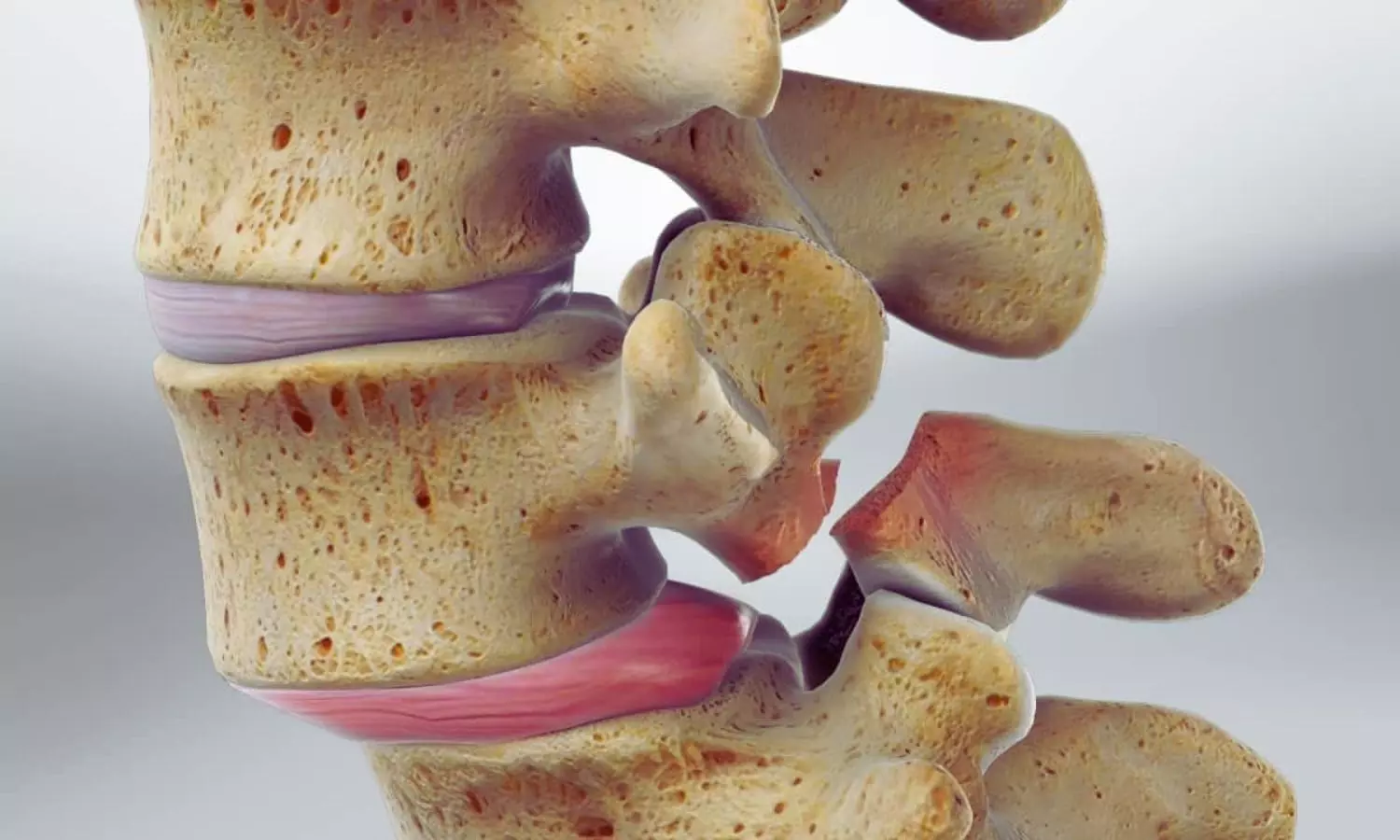
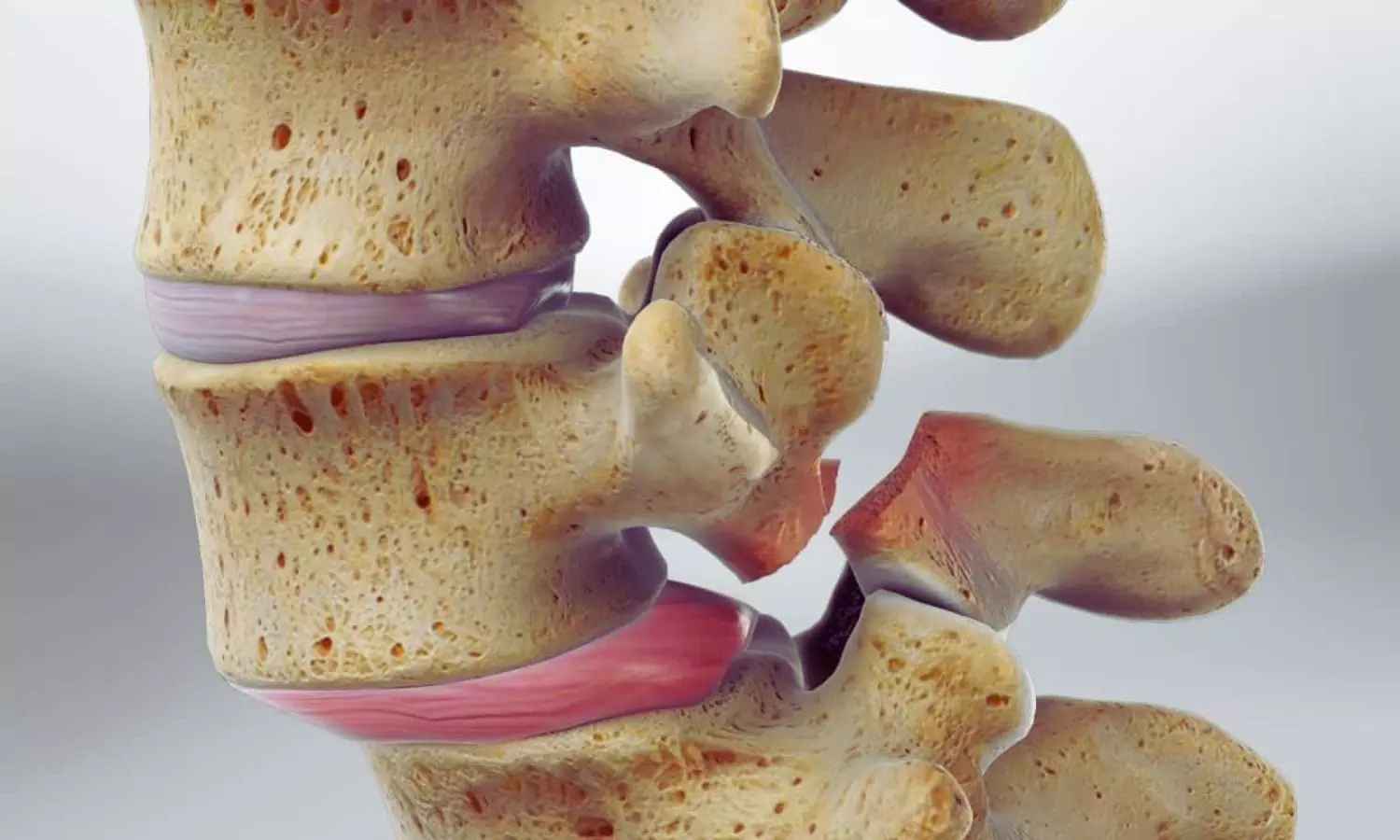
UK: A new study published in Apollo Medicine highlights a potentially important anatomical marker that may help identify young individuals at increased risk of developing spondylolysis.
The research, led by Dr.(Prof) Rajesh Botchu from the Department of Musculoskeletal Radiology at the Royal Orthopaedic Hospital, Birmingham, UK, examined whether variations in the sagittal pars inclination angle could be linked to the occurrence of pars interarticularis defects.
Spondylolysis—commonly described as a stress fracture in the pars interarticularis—predominantly affects adolescents and young adults, especially those engaged in sports involving repetitive spinal extension and rotation. Despite significant clinical interest, tools to predict susceptibility have been limited. The present study sought to investigate whether a novel radiological measurement could offer meaningful insights.
In an exclusive comment to Medical Dialogues, Dr. Botchu said, “Increased sagittal pars angle is associated with pars defect. This might help to predict who is more prone to pars defect.”

His remarks highlight the potential role of this anatomical angle as an early indicator in identifying individuals who may benefit from targeted preventive strategies.
The research team conducted a retrospective cohort study over two years, analyzing lumbar spine CT scans of 37 adults under 30 years of age. A total of 255 pars interarticularis—from vertebral levels L2 to L5—were assessed. The samples were categorized into two groups: pars intact (217 segments) and pars defect (38 segments). To explore the relationship between the sagittal pars inclination angle and spondylolysis, investigators compared angle measurements across both groups.
The
following were the key findings:
- The mean sagittal pars inclination angle in the
pars intact group was 17.91° ± 5.62°. - In the pars defect group, the mean angle was
substantially higher at 35.95° ± 6.42°. - Statistical analysis showed a highly significant
association between increased sagittal inclination and pars defects. - The steeper inclination angle may contribute to
higher mechanical stress, increasing the likelihood of stress fractures. - A natural upward trend in sagittal pars angle
from L2 to L5 was noted in individuals without defects, indicating normal
anatomical variation. - The much higher angles observed in patients with
spondylolysis suggest that excessive sagittal inclination could act as a
structural predisposing factor.
The authors note that while the results point toward a clear association, further research is required to establish a definitive cause-and-effect relationship. The implications could be far-reaching, particularly for athletes, who remain one of the most vulnerable groups for stress-related spinal injuries. If validated in larger cohorts, this measurement could play a role in early risk assessment, sports screening, and even surgical planning.
The study concludes that an increased sagittal pars inclination angle is strongly linked with spondylolysis, emphasizing the need for additional investigations to better understand its clinical utility.
Reference:
Hussein, M., Azzopardi, C., Bendi, S. R., Hassan, F., Bhogal, G., Iyengar, K. P., Mehta, J., & Botchu, R. (2025). The Role of the Sagittal Pars Inclination Angle in the Development of a Spondylolysis. Apollo Medicine. https://doi.org/10.1177/09760016241309440